Dear Maybelle,
As a science cat, I’ve adapted my drinking style to fit in with my human friends. Now I hold my mug with my paws and lap up my coffee.
I’ve never seen a bird do that.
I asked my friend Dr. Marcie Logsdon about it. She’s a veterinarian at Washington State University. She helps lots of wild birds.
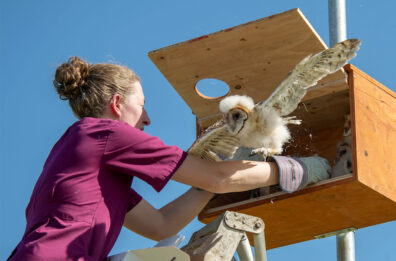
Logsdon recently raised baby barn owls that hatched in her care. They got all their water from the bits of prey they snarfed up. Now, the barn owls have graduated to a hack site, or a nest box in the wild. They hunt for their own prey. But Logsdon’s team sneaks meals into their nest box, too—just like owl parents would support their young as they learn to hunt. Her team recently raised itty bitty baby bald eagles, too. © College of Veterinary Medicine/Ted S. Warren
She told me that different kinds of birds drink in different ways.
Most birds scoop up water in their bottom beaks. They tilt their heads back, so the water runs into their throats. Then they swallow.
“If you see birds that tend to come to a bird bath, that’s what you’re going to see,” Logsdon said. “Those are your finches, your robins, your songbirds, things like that. It’s the basic way they drink.”
Some birds—especially swallows and swifts—do a variation of that technique. They fly low over lakes, rivers or ponds. They’re hunting for tasty insects. If they get thirsty, they skim their beaks in the water and scoop up a drink.
Pigeons and doves adapted to drink water by suction. They poke their entire beaks into the water. Then muscles in their throats squeeze the water up into their mouths. It’s like slurping up a drink with a straw—if your straw is made of your whole mouth.
That drinking style is so unique that bird books highlight it as a way to identify pigeons and doves.
Some birds live near the ocean, away from fresh water. Sea birds drink salt water instead. Glands inside their noses pull the extra salt from the water. Then they excrete the salt out their nostrils.
“If you ever see a sea bird up close, you might notice a little bit of white crusting around their nostrils,” Logsdon said. “That’s extra salt they’ve been kicking out.”
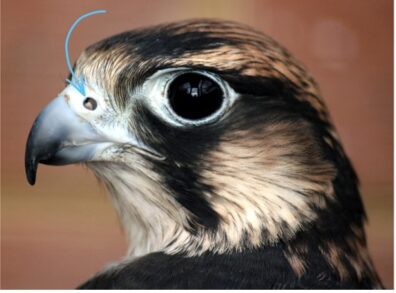
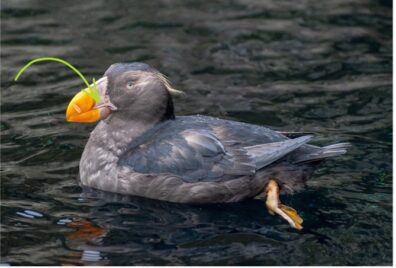
Have you ever had a drink spray out your nose? That can happen because your mouth and nose connect inside your head. A bird’s mouth and nose are even more connected than yours. They don’t have a soft palate at the roof of the mouth. They have a v-shaped opening between the mouth and nose called a choana. This falcon (left) has obvious nostrils, or nares. Some bird nostrils are covered with feathers or skin flaps or have other adaptations to help them out. This puffin’s nares are slits that sit lower on the bill. Keven Law CC BY-SA 2.0 Josh B CC BY-SA 2.0, arrows by Dr. Universe


And some birds don’t drink very much water at all. Birds of prey get most of their water from their meaty meals. They can go days without taking a sip of water.
That’s how it works for most baby birds, too. They spend weeks inside the nest, being fed by their parents.
Nestlings usually get all their water from their food. That could be chewed up insects or worms. Or little bits of prey or seeds. Sometimes bird parents dunk these treats in water for extra hydration.
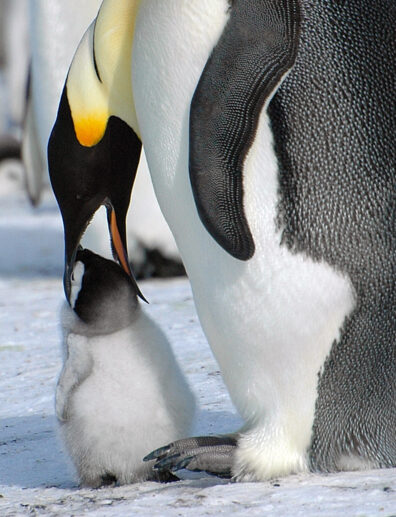
Pigeons and doves feed their babies “crop milk.” It’s a wet, lumpy secretion from their digestive system. Flamingos do it, too—but theirs is watery and red. Among emperor penguins, only dads make crop milk for their babies. Crop milk isn’t the same as the milk mammals make. But the same hormone regulates both.
It turns out birds adapted their drinking techniques to match their environment.
Enter the sandgrouse. These birds nest in super dry places, miles from water. Their babies can’t fly that far for a long time. So, sandgrouse dads adapted their belly feathers. Now they’re sponge-like.
Sandgrouse dads travel to water and soak their feathers. Then they fly back home—sometimes 30 miles away—carting up to 15% of their body weight in water. Their babies will squeegee the water from those belly feathers and slurp it up.
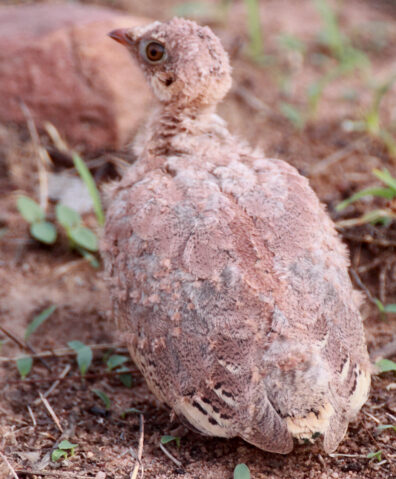
This downy sandgrouse chick is probably hoping for a treat from the store watering hole. Brian Gratwicke CC BY 2.0

That kind of parental care is so cute it should be il-eagle.
Sincerely,
Dr. Universe