Dear Nova,
Nothing says “spring” like frolicking baby animals.
I asked my friend Michela Ciccarelli why so many babies arrive then. She’s a veterinarian at Washington State University. She specializes in animal reproduction.
It turns out lots of mammals are seasonal breeders. That’s a strategy to make sure their babies come at the best time.
“It’s an evolutionary adjustment,” Ciccarelli said. “Spring is the time of year where it’s getting warmer. There’s enough forage to make sure lambs, kids, foals and calves survive.”
If those baby animals were born in the winter, their moms might find less food—and they need that food to make lots of good milk. They may face hungrier predators. Plus, freezing winter temps can be dangerous.
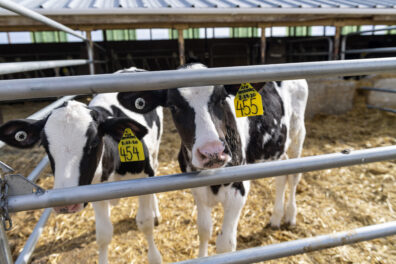
The ancestors of today’s cows were probably seasonal breeders. But now cows are managed by humans, so they can reproduce all year long. ©WSU 2020
Many animals adapted by adjusting their hormones. Hormones are chemical messages. They control things like reproduction.
Gonadotropin-releasing hormone (GnRH) acts like a switch. It sets off a cascade of chemical messages that make reproduction happen.
Melatonin is a hormone made by the brain when it’s dark. It helps animals sleep. It’s also a seasonal timer. It cranks on or shuts down GnRH, based on the sunlight and the temperature.
Some animals are pregnant for a long time—9 months or more. To have spring babies, they need to fertilize their eggs in the spring or summer. That’s when there’s more sunshine and longer days. So, these animals are long-day breeders—like horses.
For them, melatonin puts the brakes on GnRH. When there’s more light, melatonin drops. Without it, GnRH turns on and powers up reproduction.
Some animals are pregnant for a short time—about 5 months. So, they need to fertilize eggs in the fall. That’s when there’s less light. They’re called short-day breeders—like goats and sheep.
For these animals, melatonin revs up GnRH. When there’s less light, they make more melatonin. That turns on GnRH and kicks off reproduction.
All these animals use the same tools—melatonin and GnRH—just in opposite ways. But their goal is the same: to have babies in the spring.
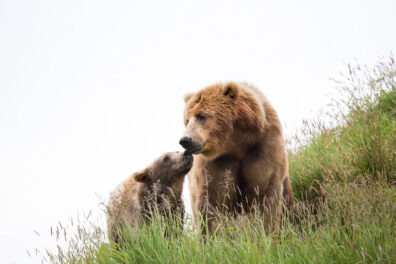
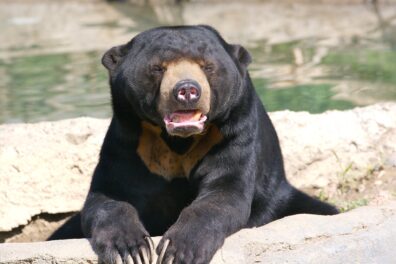
Some bears like Kodiak brown bears (left) are long-day breeders that can pause embryo development. Other bears like sun bears (right) don’t reproduce seasonally. They’re from tropical places with lots of light all the time. Lisa Hupp/USFWS, Ryan E Poplin CC BY 2.0

Some animals adapted complicated strategies. Lots of bears do embryonic diapause. They fertilize eggs in the spring. But the embryo doesn’t implant or start developing right away. It floats in suspended animation until late fall. If the bear is plump and healthy when she starts hibernating, the embryo starts growing.
That mother bear will wake up to birth and care for her cubs all winter—but take lots of naps. This form of hibernation is called torpor.
This strategy works because bear babies are super small and helpless. They spend the winter snuggled up in a safe, cozy den. They’ll be ready to tumble out when spring arrives.
Climate change is a problem for seasonal breeders. It affects the temperature and light.
“This all happened with time and the adjustment of the species to the environment,” Ciccarelli said. “With global warming, we’re seeing things that we’ve never seen before—like mares that come into heat much earlier.”
Some types of animals will adapt. Others will struggle to match their reproduction to the changes.
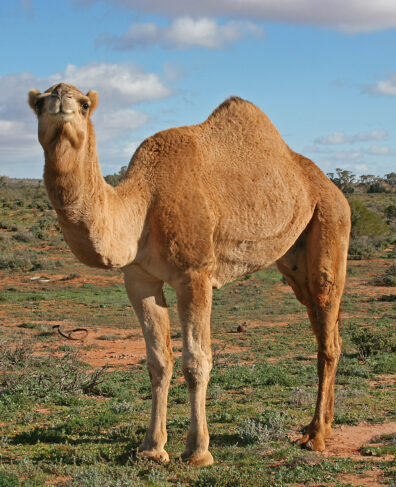
Camels are short-day breeders—with a twist. A camel’s uterus has two sides, or horns. They only maintain a pregnancy in the left side. Ciccarelli says these heat-tolerant animals may become even more important as the planet warms. Jjron CC BY-SA 3.0

Humans have affected animal reproduction in more direct ways, too. They domesticated some animals that reproduced seasonally in the wild—like pigs, cows and dogs. Now they reproduce all year so humans can have meat, milk and cute puppies.
Since humans help care for those animals, their babies can safely spring onto the scene at any time.
Sincerely,
Dr. Universe